

Breaking into the modeling industry takes preparation and a clear plan. Two of your first tools are your model digitals (also called model polaroids) and a solid strategy for building a thriving modeling career. This guide covers both: how to shoot digitals that agencies trust, and the steps that lead to becoming a professional model.
What Are Model Digitals and Polaroids?
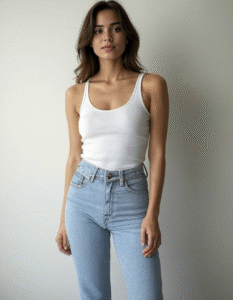
Model digitals are raw, unedited photos of a model’s natural appearance, facial features, and body proportions. They act as a blank canvas, letting agencies, clients, and casting directors assess your authentic look without the influence of heavy makeup, elaborate styling, or digital enhancement. Agencies use these images to judge your look — nothing more, nothing less.
The word “polaroids” comes from the instant cameras agencies once used for these shots. Today, most models use a smartphone or a digital camera instead, though the goal stays the same: an honest, unedited image.
Why Model Digitals Matter
Digitals do several jobs at once, and each one affects whether you get booked:
- First impressions. Agencies review your digitals before anything else. They work like a visual resume, and a weak set can end your submission before anyone reads your measurements.
- Client pitches. Agencies send digitals to clients for campaigns, editorials, runway shows, and commercial ads. Clients decide who to book largely from these raw images.
- Casting decisions. Casting directors use digitals to check whether you fit a project’s look — a luxury brand campaign calls for a different aesthetic than a fitness ad.
- Current representation. Agencies update digitals often, so your look — hair color, weight, style — stays accurate. An outdated set creates a mismatch clients notice on set.
- Versatility. Clean digitals show clients you can adapt to fashion, commercial, or editorial work without extra styling.
Key Rules for Model Digitals
Follow these standards for professional-quality model digitals that agencies accept:
- Minimal makeup. Use moisturizer and clear lip gloss only. Skip foundation, blush, eyeshadow, and eyeliner — agencies want to see your real skin texture, not a finished look.
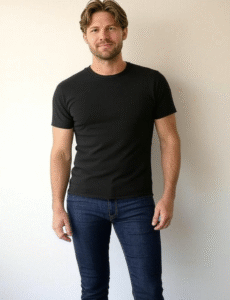
- Simple clothing. Wear a plain black or white tank top, skinny jeans, leggings, or a swimsuit. Avoid logos, patterns, bright colors, and jewelry that pull attention away from your proportions.
- Neutral background. Shoot against a plain white, gray, or beige wall. Skip textured or busy surfaces like brick or patterned wallpaper.
- Natural light. Shoot near a window, outdoors during golden hour, or on an overcast day. Harsh midday sun creates shadows that hide your features.
- No editing. Submit unretouched photos, free of filters. Edited images set expectations that don’t match how you actually look in person.
Shot List for a Complete Set
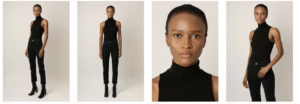
A full set of model digitals includes:
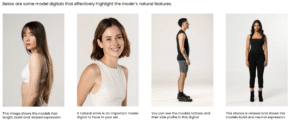
- Headshot — one smiling, one neutral, both close-up, to show your facial features and how you convey emotion.
- Three-quarter shot — waist-up, straight-on and in profile, to show your posture and bone structure, including cheekbones and jawline.
- Full-body shot — head-to-toe, captured from the front, side, and back, to display your overall proportions, height, and stance.
- Swimsuit or underwear shot — often requested for fitness, commercial, or swimwear work, to reveal muscle tone and body shape.
- Movement shot (optional) — a walking or dynamic pose that some agencies request to evaluate your movement and grace, especially for runway or editorial work.
How to Shoot Professional Model Digitals at Home
Creating agency-worthy model digitals doesn’t need a professional photographer. Follow these five steps.
Step 1: Prepare Your Look
Keep hair clean and simply styled — loose, in a neat ponytail, or pulled back, and free of heavy gel or hairspray. Trim your nails and remove chipped polish, and groom body hair as needed for a polished appearance. Choose fitted, neutral clothing, and check it for wrinkles or stains before you shoot. Apply light concealer only if you need to cover a blemish — skip foundation, bronzer, and lipstick entirely. In the days before your shoot, stick to your regular skincare routine, stay hydrated, and avoid foods that cause bloating or breakouts.
Step 2: Set Up Your Shoot
Use a smartphone with at least a 12-megapixel camera, or a DSLR, set to portrait mode or a high-resolution setting. Mount it on a tripod to keep framing consistent, or ask someone to shoot for you and give them clear direction on angles. Position the camera at eye level for headshots, and at chest or waist level for three-quarter and full-body shots. Choose a plain wall or a clean white sheet as your background, and make sure it’s smooth and free of shadows. Shoot near a window with soft, diffused light, or outdoors during golden hour or on an overcast day — avoid direct sunlight, which creates harsh contrast. Take a few test shots first to check lighting, focus, and framing before you shoot the full set.
Step 3: Pose Naturally
Stand tall with relaxed shoulders, a straight spine, and arms resting naturally at your sides. For headshots, take one smiling photo and one neutral photo, keeping your eyes engaged with the camera to convey confidence. Capture front, profile, and back angles for full-body shots, plus a 45-degree turn for three-quarter shots that highlight your body’s contours. If you include a movement shot, keep it subtle and natural rather than exaggerated. Use the same lighting and background across every shot so the full set feels cohesive.
Step 4: Review and Select
Check each photo on a computer or tablet for sharp focus and clean framing. Choose 6–10 photos that show your natural look and professionalism, covering every required shot type. Save each file as a high-resolution JPEG (2–5 MB) and label it clearly — for example, “Jane_Doe_Headshot_Smiling.jpg.” Store your final set in one folder or cloud drive.
Step 5: Record Your Measurements
Send accurate measurements with your digitals:
- Height (without shoes)
- Bust/chest (fullest part)
- Waist (narrowest part)
- Hips (fullest part)
- Shoe size
- Dress/suit size (if relevant)
Use a soft measuring tape and ask someone to help you measure accurately. Update these numbers whenever your body changes.
The Path to Becoming a Professional Model
Landing modeling work takes more than good photos. Here’s a step-by-step path to a real career.
Step 1: Understand the Modeling Industry
Modeling covers several niches:
- Fashion modeling — editorials, runway, and luxury campaigns. Usually requires 5’9″+ for women, 6’0″+ for men.
- Commercial modeling — everyday products and lifestyle brands. Open to a wider range of looks and heights.
- Plus-size modeling — inclusive fashion, beauty, and retail work.
- Fitness modeling — athletic wear and health products. Requires a toned physique.
- Petite modeling — commercial and petite clothing lines, typically under 5’7″.
- Parts modeling — hands, feet, or legs for jewelry, shoes, or cosmetics.
- Child or teen modeling — family and youth brands, with parental involvement.
Research the requirements and market demand for each niche. Runway work prioritizes height and a lean frame, while commercial modeling values relatable looks and expressive personalities.
Step 2: Build a Professional Portfolio
Your portfolio should expand beyond digitals to include 10–20 diverse images that show your range:
- Professional photoshoots with experienced photographers, covering casual, editorial, commercial, and avant-garde styles.
- Tear sheets — published work from magazines, online editorials, campaigns, or advertisements that prove real-world experience.
- A range of looks — different poses, outfits, expressions, and settings, combining natural shots with dramatic editorial images.
- A clean presentation — a physical book for in-person meetings and a digital version for online submissions, both organized with high-quality prints and a professional layout.
If you’re just starting out, consider collaborating with photographers, makeup artists, and stylists on a TFP (time for print) basis, where everyone works for free in exchange for portfolio images. Look for local creatives through social media or platforms like Model Mayhem, but always verify their credibility before you commit — legitimate collaborators have a visible portfolio and verifiable references.
Step 3: Find a Reputable Modeling Agency
A modeling agency represents you, pitches you to clients, and negotiates your contracts.
- Research agencies with a strong track record, such as IMG Models, Elite Model Management, Ford Models, Wilhelmina, or Next Management. Explore both international and local agencies depending on your goals.
- Check submission guidelines on each agency’s website — most accept digitals by email or through an online portal, and some hold open calls for new talent.
- Submit your digitals, measurements, and a short introduction, including your name, age, location, and contact information, following the agency’s exact format.
- Watch for red flags: high upfront fees for registration or classes, pressure into paid photoshoots, or no verifiable website, client portfolio, or reviews. Legitimate agencies earn commission — typically 10–20% — from your bookings and invest in your development.
- Consider a mother agency — your primary representative, who manages your career and places you with larger agencies in markets like New York, Paris, or Milan, offering personalized guidance especially useful for new models.
Step 4: Attend Open Calls and Castings
Open calls let agencies meet new talent and evaluate potential. Castings (go-sees) are auditions for specific modeling jobs, like a campaign or runway show.
- Bring a comp card — a 5×7 card with your best photos, measurements, and contact info — plus a set of digitals. Some agencies request a physical portfolio or a digital version on a tablet.
- Dress simply, matching your digitals. Women may want classic black pumps for runway evaluations; men should wear fitted pants and a plain shirt.
- Arrive early, bring a positive attitude, and stay professional with everyone you meet, from receptionists to casting directors.
- Walk with confidence, hold eye contact, and introduce yourself clearly.
- Stay open to feedback given on the spot, whether it’s about your walk, your pose, or additional photos taken during the call.
Step 5: Network and Build Industry Relationships
Relationships with photographers, stylists, designers, and other models open doors that submissions alone won’t.
- Attend fashion shows, workshops, and industry mixers hosted by local fashion organizations or modeling communities.
- Collaborate with photographers, makeup artists, and designers on test shoots — these often lead to referrals or job offers.
- Share your work on Instagram and keep your online presence professional, avoiding controversial or unprofessional posts.
- Join modeling communities through forums, local meetups, or social media groups to trade advice and leads.
Step 6: Develop Your Skills and Marketability
- Study fashion magazines, editorials, and runway shows to learn how to pose effectively, and practice in front of a mirror or camera.
- If you’re pursuing fashion modeling, practice a confident, fluid runway walk with strong posture and a steady pace — designer runway videos are a good reference.
- Work on expressive range through your eyes and body language, which matters most for editorial and commercial shoots.
- Learn industry terms like comp card, tear sheet, go-see, and booker so you can communicate confidently with agencies and clients.
- Stay open to multiple niches — a commercial model might also pursue fitness or plus-size work, which widens your opportunities.
Step 7: Maintain Your Health and Appearance
Your physical and mental well-being are the foundation of a sustainable modeling career.
- Eat a balanced diet with fruits, vegetables, lean protein, and whole grains to maintain energy and a healthy physique — avoid crash diets, which harm both your health and your appearance.
- Exercise regularly with a mix of cardio, strength training, and flexibility work; yoga or Pilates can improve the posture and grace that matter for modeling.
- Follow a consistent skincare routine, use sunscreen daily, and consult a dermatologist for persistent concerns.
- Protect your mental health through rest, journaling, or therapy — the industry brings frequent rejection, and resilience matters as much as your look.
- Update your digitals every 3–6 months, or sooner after a major change like a new hairstyle, weight change, or tattoo.
Step 8: Stay Persistent
Rejection is a normal part of the process, not a verdict on your potential. Break your career into manageable goals — signing with an agency, booking your first job, building a strong portfolio. Use feedback from castings to improve your presentation, celebrate small wins along the way, and stay informed about industry trends like emerging designers and inclusive casting practices.
Common Mistakes to Avoid
- Over-editing digitals. Heavily retouched or filtered digitals mislead agencies and clients, leading to lost opportunities.
- Wearing the wrong clothing. Baggy, oversized, or flashy outfits hide your body shape and distract from your natural look.
- Ignoring agency guidelines. Each agency has specific rules for file size, shot type, or naming — skipping them can get your submission overlooked entirely.
- Submitting inaccurate measurements. Incorrect numbers lead to miscasting and client dissatisfaction, so double-check before you send them.
- Falling for scams. Be wary of agencies or individuals who promise fame in exchange for high fees or questionable services — research thoroughly and trust your instincts.
- Showing up unprepared. Arriving late or displaying a negative attitude at castings or shoots damages your reputation quickly.
- Skipping self-care. Overworking or neglecting your health affects both your appearance and your performance on set.
Additional Tips for Aspiring Models
- Read every contract carefully, paying attention to exclusivity terms, commission rates, and usage rights for your images — consult a legal professional if needed.
- Build a support system of friends, family, or mentors who encourage your goals and offer perspective during difficult stretches.
- Research visa requirements and cultural expectations before working in international markets like New York, Paris, Milan, or Tokyo.
- Tell someone your whereabouts and verify legitimacy before meeting a new photographer or attending a casting.
- Document your castings, shoots, and bookings to track progress and spot areas to improve.
Conclusion
Strong model digitals and a clear career strategy are the foundation of a modeling career. Create authentic, high-quality digitals, follow a persistent and strategic approach to the industry, and you position yourself for real opportunities in fashion, commercial, or niche modeling. Take your photos, research your agencies, and start building your portfolio — the process rewards patience and consistent effort.